
Defining "Conservative" and "Liberal"
Conservatism is an approach, not an ideology

One of the greater absurdities in American politics is the describing of the Right as “conservatives” and the describing of the Left as “liberals”. The latter is an American anomaly; most of the rest of the world is closer to the actual definition of “liberal”, which derives from the Latin “liber”, meaning “free”. At the time the concept was founded, liberalism was the idea of a far more limited government and far more individual rights than anything the world had ever seen. It took an Orwellian turn in 20th Century America under the American Left’s consensus “best president ever”, Franklin Delano Roosevelt, who gave a speech articulating his famous “Four Freedoms”:
Freedom of Speech
Freedom of Worship
Freedom from Want
Freedom from Fear
The obvious lie in FDR’s speech is seen in the change of prepositions (from “of” to “from”) between the first two items (which are genuine freedoms) and the last two (which are Orwellian bastardizations of the concept of freedom). Being protected from the world like a tiny, helpless child is not freedom. Even in theory, it has a massive cost in other people’s labor, and in practice it requires severe restrictions on the part of the “beneficiary”. A person might rationalize trading freedom for security, but it is still a lie to call that “liberalism”. Nevertheless, the American Left started describing its opposite of liberalism as “liberalism”, to such an extent that offshoot terms (“classical liberalism” and “libertarianism”) sprang up to replace the mutilated original.
And yet, the term “liberalism” might still not be so misunderstood as “conservatism”. Conservatism is an approach, not an ideology. It is best described as a reference to GK Chesterton’s “Fence”, which has become the name of an axiom:
“Do not remove a fence until you know why it was put up in the first place.”
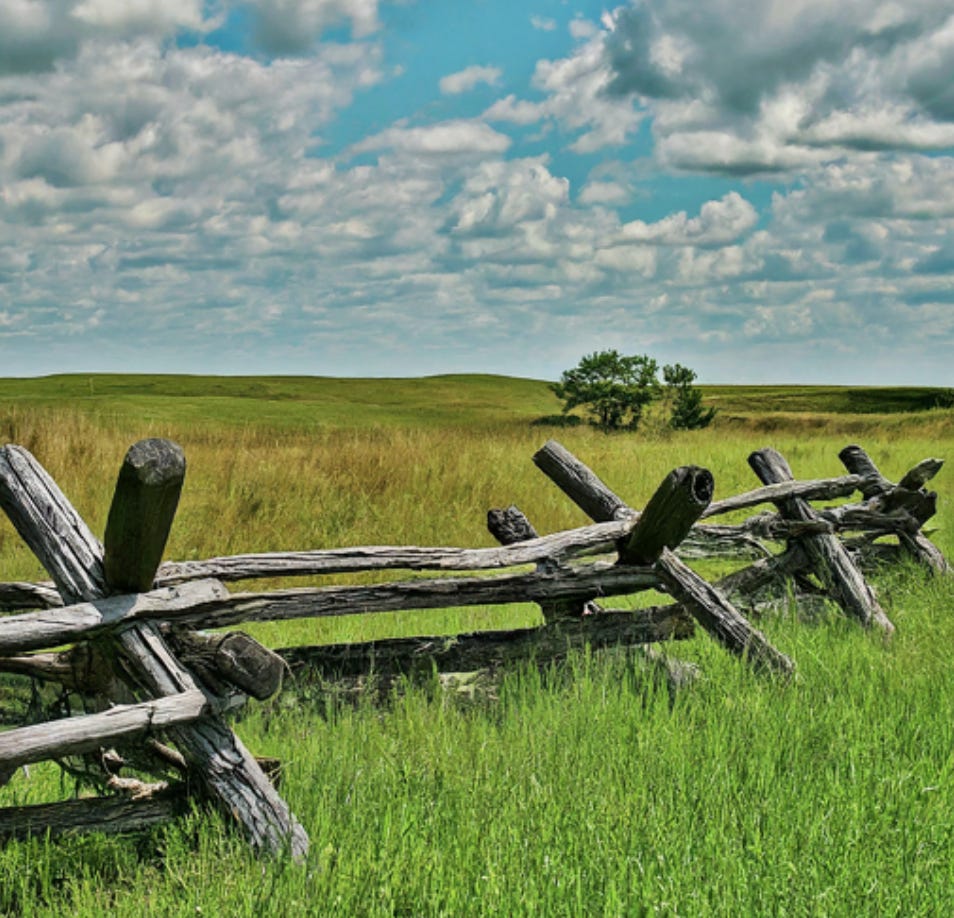
This is very different from the stereotype of “opposing all change”. We should see the absurdity of that stereotype in the platform of any supposedly “conservative” political party, which invariably involves… changing a bunch of things. Some of those changes might be the reversions of recent changes, but nevertheless, the notion that conservatism means “never change” is plainly wrong.
I’d be remiss if I didn’t include another underrated reference - a quote by Donald Kingsbury:
“Tradition is a set of solutions for which we have forgotten the problems. Throw away the solution and you get the problem back.”
Those most opposed to the conservative approach like to accuse conservatism of “superstition”; a blind adherence to the past. It may indeed be that sometimes the “conservative” doesn’t know why the old practice exists, but that’s just all the more reason (per Chesterton’s Fence) for him to resist change.
In many other situations, the “conservative” is like the parent telling a child not to touch a hot stove. The child may never have experienced the pain of being burned, but the parent is trying to keep it that way!

Because conservatism is an approach to change, it should not be treated as an ideology. When (classical) liberalism was first introduced, it would have been conservative to be skeptical of the new idea. A Soviet conservative in the 1980s might have resisted the end of communism. We don’t typically think of “clinging to communism” as a “conservative” behavior, but it could be. Of course, communism’s many failures have made it rare that someone would see benefit in conserving it!
Few terms generate as much miscommunication today as “conservative” and “liberal”, because they are so frequently misdefined. Hopefully, this brief writeup will help improve some dialogue.
You define "conservative" and "liberal" precisely in the way I prefer to use these terms. That doesn't mean that we are using the One True Definition of each of these terms, because there is no such Platonic world of eternally correct definitions. But there is are solid historical precedents for these definitions, and those definitions are what makes it possible for me to describe myself as both conservative (cautious about taking down a fence before understanding its function) and liberal (valuing freedom).
I think you nailed it with this one.